
Global Climate Impacts: Heat, Fire, Health, Water, and Methane Risks Across Europe, Africa, Asia, and South America
Climate change is affecting tourism, wildfire risk, air quality, access to cooling, skin health, and landfill methane emissions across Spain, North Africa, South Asia, and South America

Extreme heat is affecting tourism, fire risk, and access to cooling across Spain, North Africa, and India, while climate-related hazards are also worsening air pollution, water stress, skin health risks, and methane emissions in other regions. In Spain, hotter summers may affect whether tourists return and where they choose to travel. Across Algeria, Morocco, France, and Spain, wildfires are damaging homes, forests, palm groves, and rural livelihoods during periods of extreme heat. Sri Lanka is facing air pollution risks shaped by both local emissions and pollution transported across borders, while India’s growing need for cooling is exposing deep inequalities in who can stay safe during dangerous heat. In Bolivia, drought, fire, and poor water quality are adding to health risks, including skin conditions. And in Chile, methane from a major landfill shows how waste systems can contribute to both near-term warming and local air-quality concerns.1
Need to read this in a language other than English? Try OpenL (up to 1,500 characters) or Google Translate—both offer free translations into 100+ languages.
Algeria, Morocco, Spain, France
Extreme heat is starting to affect Spain’s tourism economy — Spain’s tourism sector is one of the country’s major economic strengths, supporting employment, income, and local businesses across much of the country. But part of Spain’s appeal still depends on weather conditions that are becoming less reliable as summers get hotter. A 2026 CaixaBank Research analysis used anonymized foreign card-payment data to examine how international tourists responded after experiencing extreme heat during trips to Spain. The results suggest that heat can affect whether visitors come back. When temperatures during a tourist’s stay rose well above historical norms, the likelihood of that tourist returning the following year declined. Visitors who had the hottest experiences were about 15% less likely to return the following year than those whose stays had temperatures near the historical average. The pattern held when the researchers updated the analysis with 2024 and 2025 data, suggesting it reflected a consistent behavioral response rather than a single unusual year.
The tourists who did return usually did not abandon Spain or completely change the type of holiday they wanted. Instead, they made smaller adjustments inside the Spanish tourism market. Many visitors remained loyal to the same broad destination type and season, especially in Mediterranean areas, but chose cooler municipalities, coastal areas, islands, or higher-altitude places within those categories. Extreme heat may therefore shift where tourism spending goes, even when national tourism demand remains high. A visitor who still wants a Mediterranean summer trip may look for a cooler coastal town. A visitor returning to an inland destination may choose a place at higher elevation. These are subtle changes, but they suggest Spain’s tourism sector is already adjusting to hotter conditions. Hotels, restaurants, shops, tour operators, and local governments may need to plan around hotter days more directly, from rethinking how streets and public spaces handle peak heat, to shifting schedules and expanding options that do not depend on being outdoors in the middle of the day. Spain is still a major tourist destination, but extreme heat can change how comfortable a trip feels, where visitors choose to stay, how they spend money, and whether they decide to come back.
Wildfires are straining communities across Algeria, Morocco, Spain, and France during extreme heat — Wildfire is the shared story across North Africa and western Europe this summer. Fires reached Seraidi in mid-July, a forest-surrounded town west of Annaba, sending more than 100 people to hospitals and affecting more than 150 homes. Civil protection crews were still fighting the fires the next morning. Algeria had already been dealing with hundreds of wildfires for several days, with at least six deaths reported across several provinces. Northern Algeria faces forest fires every summer, but drought and climate change are making the fire season more dangerous. Recent years have brought deaths, destroyed homes, and the loss of thousands of hectares of forest and farmland. The wildfires came during an intense North African heatwave, with nearby Tunisia seeing temperatures as high as 49°C and electricity systems strained by heavy air-conditioning use. Algeria experienced its highest energy demand ever during this heatwave. In Algiers, that same reliance on cooling equipment became part of a separate fire tragedy, after police said a faulty air-conditioning unit that had been running continuously amid the extreme heat sparked an orphanage blaze that killed 11 people and injured 19.
In Algeria, fire risk is also tied to bigger changes in rural farming regions such as Kabylie. The Oued Sahel-Soummam Valley has long depended on small landowners growing olives and other tree crops. Scarcer and less predictable rainfall is making rain-fed olive cultivation harder to sustain, especially for smallholders who have long depended on seasonal water rather than expensive infrastructure. Some farmers are trying to keep orchards productive by drilling wells and using more intensive irrigation, but that can draw down limited water supplies and make scarcity worse over time. For smallholder farmers, each coping strategy can make the next season harder. Keeping orchards alive may require more water, equipment, and cash, but those resources are least available to families trying to maintain older farming practices. Many continue working the land under hotter and drier conditions, even as younger people move toward non-agricultural work, leave the region, or begin to see farming as part of a family past rather than a viable future. Wildfires are one part of the larger rural crisis, damaging land and forests in places where climate stress, water shortages, and economic change are already weakening agricultural livelihoods.
Morocco is facing its own wildfire threat during extreme heat. In the southeastern province of Errachidia, crews worked to contain a fire that swept through the Afous oasis and damaged a large area of palm groves. No casualties were reported, but the fire came as Morocco remained on high alert for wildfire risk. Earlier in July, the National Agency for Water and Forests issued extreme wildfire warnings for forests in 12 provinces, using its highest red alert level. Those warnings coincided with a heat wave forecast to push temperatures as high as 46°C. In oasis communities, fire risk can affect more than vegetation. Palm groves are tied to shade, farming, local livelihoods, and the stability of places already exposed to heat and water stress.
Fires are also forcing large-scale evacuations in Spain and France. Nearly 270,000 people were under evacuation orders across the two countries, including about 200,000 in France and around 70,000 in Spain. Southwestern France has been especially affected, including areas near Bordeaux such as Gironde and Landes. French officials reported that about 98,000 hectares had burned across the country since the start of the year. In Spain, fires burned near Madrid, and officials said about 130,000 hectares had burned this year, above the country’s recent annual average. These fires are unfolding during an exceptionally hot summer in western Europe, where successive heat waves, dry weather, and below-average precipitation have left vegetation more likely to ignite. Heavy winter rainfall earlier in the year had produced dense new plant growth, which the summer heat and drought then dried into abundant fuel.
Climate change does not have to start a fire directly to make fire danger worse. Hotter air can dry soils and vegetation more quickly, increase water stress, and extend the periods during which forests, grasses, crops, and palm groves can burn. When extreme heat combines with drought, wind, and abundant dry vegetation, fires can spread faster and become harder to control. That matters even in places where hot summers are already part of the climate. Human-caused warming raises the baseline for extreme heat, making dangerous fire conditions more likely, more intense, or more prolonged.

Sri Lanka, India
Climate change is amplifying transboundary air pollution and health risks in Sri Lanka — Air pollution is a major public health concern in Sri Lanka. Emissions from local sources contribute to degraded air quality, while pollution transported from India is further intensifying hazardous air pollution episodes across the island. Domestic emissions from transportation systems, industry, waste burning, and the Norochcholai coal-fired power plant contribute to Sri Lanka’s pollution burden. However, seasonal agricultural burning in northern India, combined with toxic pollution from urbanization activities (such as construction and power generation) can transport large quantities of aerosol pollutants across borders. Studies indicate that in neighboring countries such as Sri Lanka and Nepal, approximately 50% of air pollution originates from transboundary sources. Climate change is intensifying this environmental challenge that poses significant health risks to Sri Lankans. Rising sea surface temperatures in the Bay of Bengal are contributing to stronger tropical cyclones, while changing atmospheric circulation patterns can transport polluted air masses farther distances across South Asia, carrying short-lived climate pollutants from India into adjacent countries like Sri Lanka. A clear example occurred in December 2022, when Cyclone Mandous altered regional wind patterns and carried airborne contaminants from northern India into Sri Lanka. On December 9, Colombo’s PM2.5 concentration reached 81 μg/m³, more than three times the annual average of 25.2 μg/m³ and approximately 16 times the World Health Organization’s recommended annual guideline. In response, the Sri Lankan government temporarily closed schools, warning that children, older adults and pregnant women were particularly vulnerable to the hazardous air quality. Long-term research shows that the country continues to contend with persistent air quality challenges. A 2020 review of air pollution studies in Sri Lanka published in the Ceylon Journal of Science found that concentrations of sulfur dioxide (SO₂), ozone (O₃), and nitrogen dioxide (NO₂) increased between 1997 and 2003. These trends reflect the combined influence of domestic emissions and regional pollution transport.
The health consequences of air pollution are significant, with exposure triggering inflammation, oxidative stress, and immune dysfunction while increasing risks to the lungs, heart, and brain. Fine particulate matter (PM2.5 and PM10) is particularly harmful in that these microscopic particles can penetrate deep into the lungs and enter the bloodstream. Sources of PM2.5 and PM10 include coal combustion, biomass burning, agricultural fires, cement production, and waste burning. Exposure to these pollutants is associated with respiratory illnesses such as asthma, bronchitis and pneumonia. In 2018, respiratory illnesses were the third leading cause of hospitalizations in Sri Lanka, and medical experts report that the country has one of the highest asthma prevalence rates globally.
Extreme heat and unequal access to cooling in India — Climate change is intensifying extreme heat across India, but the ability to adapt remains deeply unequal. As temperatures rise and humidity increases, access to cooling is becoming a critical factor in determining who is most vulnerable to dangerous heat conditions. On April 27, all fifty of the world’s hottest cities were located in India, and across northern and eastern regions, temperatures of 45°C (113°F) to 48°C (118.4°F) are now occurring with greater frequency during prolonged heat waves. The health risks are driven not only by rising temperatures but also by increasing humidity, which limits the body’s ability to cool itself through sweating. High humidity slows the evaporation of sweat, reducing the body’s ability to regulate its temperature and increasing the risk of dangerous heat stress. India’s average relative humidity increased from 67.1% between 2015 and 2019 to 71.2% between 2020 and 2024. Researchers use wet-bulb temperature, which combines heat and humidity, to measure conditions that challenge the human body’s ability to regulate temperature. A wet-bulb temperature of 35°C (95°F) is considered the threshold beyond which even a healthy person resting in the shade, with access to water, could experience a fatal rise in core body temperature within hours. Air conditioning greatly reduces these risks, but access to cooling remains limited across India. Only about 8% of India’s 300 million households own an air conditioner, and rural ownership is estimated at roughly 1%. Most cooling systems are concentrated among wealthier households, while millions rely on fans and open windows that provide some relief but cannot reduce humidity or protect against extreme wet-bulb conditions. The inequitable availability of cooling is reflected in India’s growing energy demand. The country’s electricity consumption is projected to rise by approximately 12% by 2050, driven in part by increased demand for cooling. In major Indian cities, air conditioning already accounts for 40% to 60% of peak summer electricity demand. India’s power demand reached a record 270 gigawatts on May 21, largely due to increased cooling needs during extreme heat. For many Indians, however, cooling remains out of reach, particularly among workers whose livelihoods require them to spend long hours outdoors. Approximately three-quarters of India’s workforce—about 380 million people—work in heat-exposed sectors, including agriculture and construction. Up to 90% of the labor force works informally, often without employer safety protections. Outdoor workers, along with elderly adults, infants, and pregnant women, face some of the greatest risks as extreme heat becomes more frequent and intense. India’s heat challenge reflects a broader global pattern in which the communities facing the greatest heat risks often have the least access to cooling. New research published by Climate Impacts Lab (CIL) identifies 18 countries caught in what it calls the “Mortality-Cooling Trap,” where high heat-related deaths coincide with limited growth in electricity use and cooling access. Four of India’s neighbors—Pakistan, Bangladesh, Nepal, and Myanmar—are included on that list. More than 676 million people worldwide live in regions facing this challenge, and the report projects approximately 377,000 annual deaths by 2050 in these areas.

Chile, Bolivia
Climate change, water scarcity, and rising skin health concerns in Bolivia — Climate-driven drought and extreme weather are creating new health challenges in Bolivia, including the increased risk of dermatitis and other skin conditions. Recent reports from the International Federation of Red Cross and Red Crescent Societies (IFRC) have identified dermatitis as a significant health concern affecting thousands of Bolivians. Dermatitis is a chronic inflammatory skin disorder characterized by dry skin, intense itching, and recurring lesions. Atopic dermatitis affects up to 20% of children and 5–10% of adults worldwide. While genetic factors and immune dysfunction play important roles in atopic dermatitis, environmental stressors (including extreme temperatures, changes in humidity, and exposure to air pollution and allergens) can affect disease severity. In Bolivia, prolonged drought, extreme heat, and wildfire-related air pollution may worsen existing skin conditions by increasing inflammation and triggering flares. The landlocked country has experienced several extreme climate events in recent years, driven in part by El Niño. In September 2023, Bolivia recorded its hottest wintertime temperature on record at 40.3°C. The combination of extreme heat and prolonged drought left nearly 2 million people across seven of Bolivia’s nine departments—La Paz, Potosí, Cochabamba, Oruro, Chuquisaca, Tarija, and Santa Cruz—to confront depleted water reservoirs, damaged crops, and significant losses to their livelihoods. As water supplies declined, communities faced reduced access to water for drinking, agriculture, and hygiene, increasing vulnerability to infectious diseases and skin conditions. A historic wildfire season in 2024 further compounded Bolivia’s water challenges, while subsequent flooding and river overflows affected the department of Santa Cruz, the country’s commercial hub, where ash, sediment, and other contaminants entered water systems, leading to degraded local water quality. For communities already experiencing water shortages, dependence on contaminated water increased risks of gastrointestinal illnesses, infectious diseases, and skin irritation. Limited access to clean water can also make it more difficult to maintain the skin’s protective barrier, contributing to conditions such as contact dermatitis.
Climate change is increasingly recognized as a factor influencing skin health. Emerging research indicates that heat extremes and particulate pollution can contribute to inflammation and exacerbate inflammatory skin conditions, including atopic dermatitis. The International Eczema Council has highlighted climate-related hazards associated with greenhouse gas emissions as potential factors that can worsen atopic dermatitis symptoms, although impacts vary depending on regional climate conditions and individual vulnerability.
Landfill methane emissions highlight a global climate challenge in Chile — Methane emissions from landfills are a significant contributor to global climate change, and a landfill in central Chile illustrates the scale of this challenge. The Lomas Los Colorados landfill in Tiltil, located about 60 kilometers (37 miles) north of Santiago, is among the world’s largest human-made sources of methane, according to an April 2026 report by the United Nations Environment Programme (UNEP). The site receives waste from more than 7 million people in the greater Santiago metropolitan area and produces an estimated 102,667 metric tons of methane annually, primarily from the decomposition of organic waste. More than half of the material buried at the landfill consists of food scraps, plant material, grass, and pruning waste. When organic matter breaks down without access to oxygen, it releases methane, a potent greenhouse gas with a warming effect approximately 86 times greater than carbon dioxide over a 20-year period. Methane, the primary component of natural gas, has contributed to roughly 30% of the rise in global temperatures since pre-industrial times. Given its exceptional warming potential, reducing methane emissions represents a key opportunity to limit near-term warming. Since 2007, Chile has implemented measures to capture some of the methane produced at Lomas Los Colorados by converting landfill gas into biogas, which is primarily composed of methane and carbon dioxide, to help fuel a nearby power facility. However, continued emissions from the site highlight the challenge of managing methane from large-scale waste systems, where organic materials can continue generating methane for decades. The challenge extends beyond Chile. The waste sector accounts for approximately 20% of human-caused global methane emissions, primarily from organic materials decomposing in landfills, open dumps, and wastewater systems. Three Chilean landfills are included among the world’s largest methane-emitting sites identified by UNEP, underscoring how waste management practices contribute to a broader global climate challenge. Landfill methane also creates local environmental and public health concerns. As methane escapes from landfill sites, it is often accompanied by other compounds, including hydrogen sulfide and ammonia, which produce noxious odors and contribute to quality-of-life impacts for nearby communities. Methane also contributes to the formation of ground-level ozone, a harmful air pollutant that affects respiratory health and damages ecosystems.

We Would Love to Hear From You!
Have you noticed the impacts of climate change in your community? Whether it’s unusual weather patterns or disruptions in local ecosystems, we’d love to hear your thoughts. Share your experiences or observations in the comments below and join the conversation!
Your Feedback Matters
At Global Climate Dispatch, we strive to provide accurate and equitable coverage of climate change and its impacts. If you come across anything that seems inaccurate or concerning, please don’t hesitate to let us know. Your insights help us ensure that the information we share remains truthful, balanced, and relevant to all.
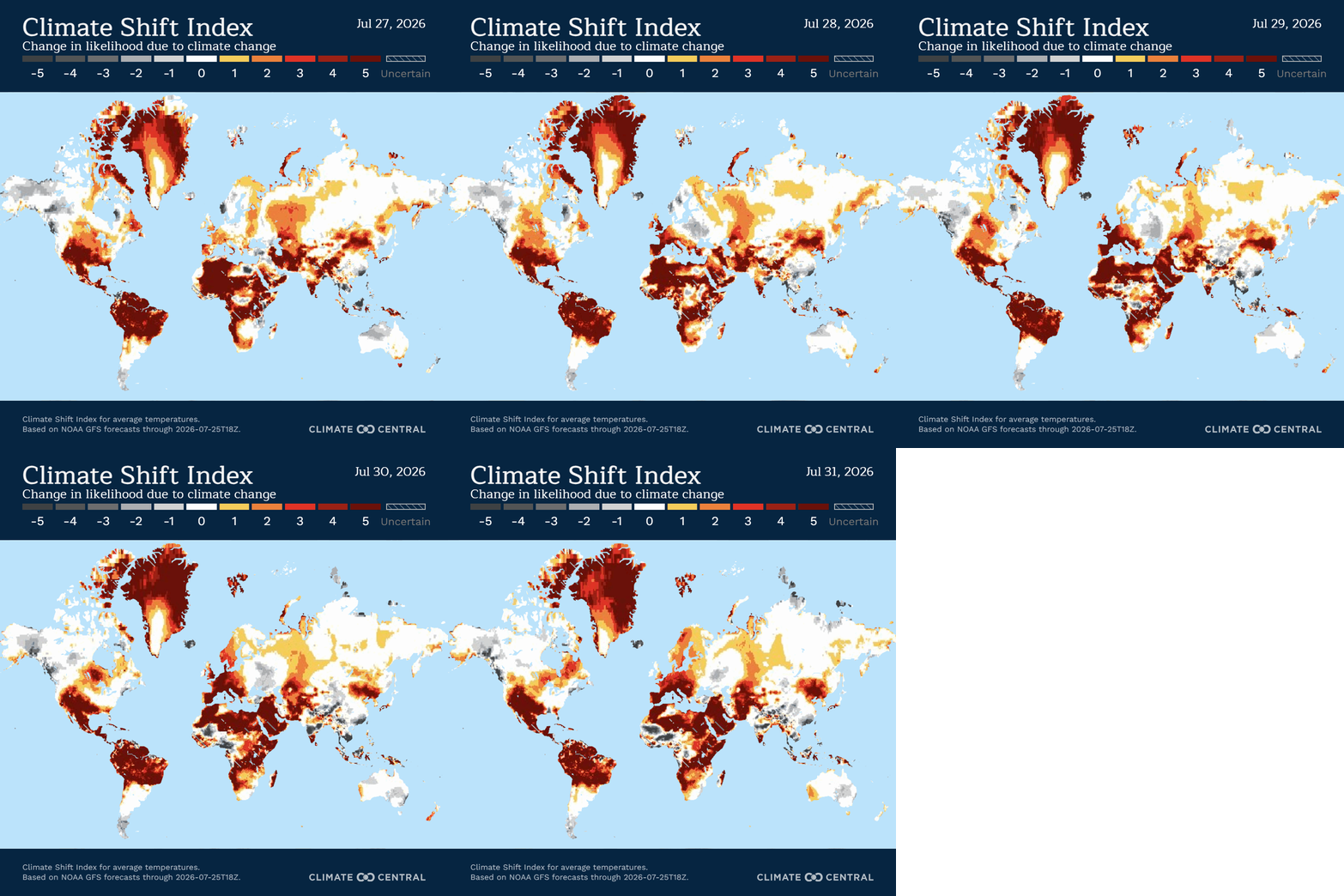
Locations featured are chosen based on data from Climate Central’s Climate Shift Index map. Some graphics used may also come from Climate Central’s Climate Shift Index map. Any original analyses contained in this blog or any views expressed in this blog, unless otherwise noted, are solely the expression of its authors and are unaffiliated with Climate Central or any other entity or person referenced within.
You're work is incredible