
Global Climate Impacts: Heat Extremes, Water Stress, Infrastructure Strain, and Ecosystem Damage Across Africa and Southeast Asia
Extreme heat and flooding are disrupting education and infrastructure across Africa, while pollution and fisheries decline are undermining coastal livelihoods in the Philippines.

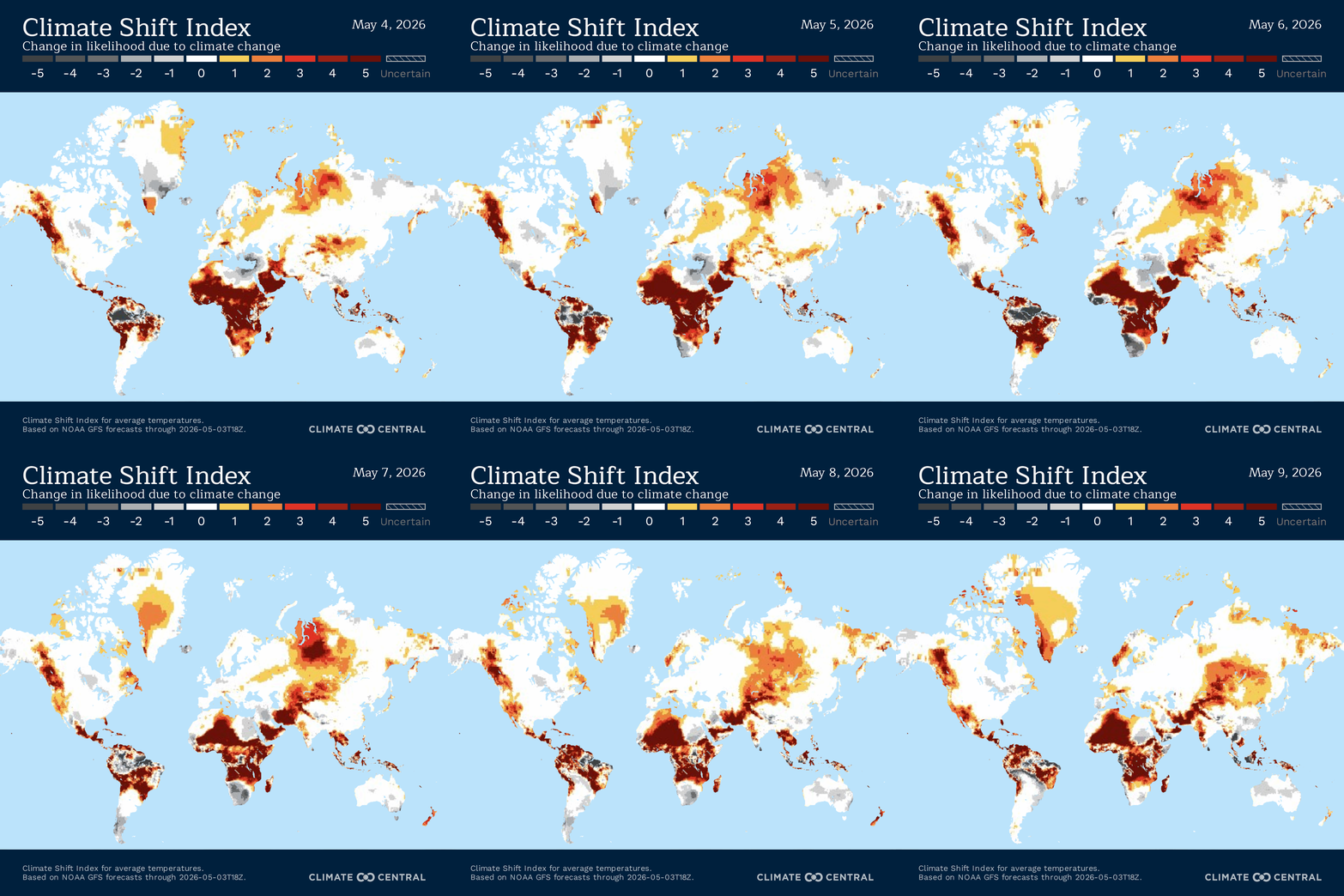
Climate Central’s Climate Shift Index1 (CSI) highlights widespread unusual heat this week across parts of southern Africa, eastern Africa, and the Sahel, where climate risks are affecting food production, infrastructure, education, water access, and health systems. In Zambia and Angola, rising heat and shifting rainfall are increasing pressure on rainfed agriculture, threatening maize and other staple crops while raising risks for household incomes, food prices, and rural livelihoods. In Malawi, climate stress is expected to increase the cost of maintaining roads, which could limit rural access to markets, schools, clinics, and emergency support during floods and heavy rainfall. In South Sudan, extreme heat and flooding are disrupting education, forcing school closures, relocations, and planning changes in a system already strained by conflict and limited resources. And in the Philippines, warming waters and heavier rainfall are compounding pollution risks for coral reefs, while fuel shocks are adding pressure to fishing communities already facing climate-related changes offshore.


Need to read this in a language other than English? Try OpenL (up to 1,500 characters) or Google Translate—both offer free translations into 100+ languages.
Zambia, Angola, Malawi
Climate change is projected to reduce crop yields and household incomes, and slow economic growth across Zambia — A 2021 study found that by mid-century, rainfall is projected to decline by roughly 3 to 4 percentage points in Zambia’s southern and western regions, while temperatures rise by about 1.8°C nationwide, with some projections reaching as high as 3.6°C. The largest losses are expected in the south and west, where many households depend heavily on rainfed farming and have limited ability to absorb drought or poor harvests. Maize, the national staple and source of about 63% of dietary energy, is projected to be the most affected crop, with yields falling by roughly 3 to 6% in the hardest-hit regions. Individual outcomes vary much more widely, ranging from losses of around 30% to gains of around 26% in those same regions. Cotton and root crops face smaller losses and, in some northern areas, may see modest gains, suggesting that crop diversification could help reduce risk. Over time, these agricultural losses are expected to reduce national GDP and household spending, with the greatest burden falling on rural households in the south and west.
The uneven distribution of these impacts matters because the southern and western regions account for a substantial share of Zambia’s maize production, meaning losses there extend beyond local communities to the national food supply and prices. More than 90% of smallholder farming across the country depends on rainfall, leaving farmers with limited capacity to absorb seasons of drought or erratic precipitation. The study also notes that these estimates likely understate total economic losses, as the analysis considers only agricultural impacts and excludes additional effects on infrastructure, energy systems, and other sectors.
These agricultural losses sit within a broader set of climate risks that could further weaken Zambia’s ability to adapt. When agriculture, roads, and energy are considered together, climate change could reduce Zambia’s GDP by about 6% by 2045–2050 under an unconstrained emissions scenario, compared with a smaller but still substantial loss under a stronger global mitigation pathway. Roads introduce the most uncertainty because transport infrastructure connects agriculture, mining, petroleum, manufacturing, and food processing across the economy. Damage to roads can raise market costs, disrupt supply chains, and divert public spending from new development toward repairs. The energy system faces another major vulnerability. Zambia depends heavily on hydropower, and reduced water availability can cut local electricity production, increasing reliance on imports from the regional power market. That matters for agriculture as well as industry, since electricity shortages can disrupt food processing, cold storage, transport, market access, and the services farmers rely on before and after harvest.
Rising heat and declining rainfall are also expected to make Angola’s rainfed agriculture more difficult, especially in the south and southwest — Angola’s agricultural sector is highly exposed to climate change because nearly 95% of farming depends on rainfall, while irrigation remains limited by water availability and cost. A 2025 agroclimatic assessment projected widespread warming across the country by mid-century, with average daily maximum and minimum temperatures rising by roughly 2 to 3°C and hotter conditions increasing the number of tropical nights, warm spells, consecutive summer days, and warm and wet days. Rainfall changes are regionally uneven, but the most severe drying is projected in the southwest, particularly Namibe and Huíla, where precipitation losses could reach up to 300 mm. Consecutive dry days are also expected to increase across the country, increasing water stress for farmers who already rely heavily on seasonal rains. These changes are especially important because Angola has already experienced repeated drought-linked food crises. In 2012, drought in Huambo, Huíla, and Bié, provinces responsible for more than half of national cereal production, exposed 1.8 million people to food insecurity as cereal production fell from 1.4 million to 509,000 tons. In 2019, another severe drought contributed to a food security and nutrition crisis affecting 2.3 million people, including nearly half a million children under five.
The projected changes will not affect all crops or regions equally. Maize and beans are among the most vulnerable because they are more sensitive to heat and water stress, especially in southern and southwestern regions where reduced rainfall and rising temperatures are expected to be most pronounced. Changes in the timing and persistence of wet and dry periods could also affect the onset of the rainy season, creating problems for traditional rainfed planting calendars. Sorghum, millet, and cassava appear more resilient under future conditions, making crop diversification an important adaptation option for areas where maize and beans become less reliable. The central region, Angola’s largest agricultural producer and a key part of national food security, faces a mixed future, with more consecutive wet days potentially benefiting some crops while higher temperatures and more heat extremes could disrupt crop cycles and reduce yields. In the north and northeast, cassava and potatoes may remain more viable because of higher rainfall, though rising temperatures could still affect potato productivity. These shifts could deepen rural poverty and raise food prices in communities that already face repeated drought-linked crises.
Climate change is expected to increase the cost of maintaining Malawi’s roads, threatening rural access to markets, services, and disaster response — Malawi’s road network is highly exposed to climate stress, with heavier rainfall, flooding, and higher temperatures expected to increase damage to both paved and unpaved roads through mid-century. A regional infrastructure analysis of Malawi, Mozambique, and Zambia estimated that the three countries could face roughly $596 million in climate-related road maintenance and repair costs by 2050 under median climate scenarios, rising to $772 million under higher-impact scenarios if governments respond reactively rather than adapting road systems in advance. Malawi’s projected road burden was smaller than Zambia’s in total dollar terms, but the impact is still significant because road access is central to rural livelihoods, market connections, healthcare, education, and disaster response. Malawi’s no-adaptation road costs were estimated at about $165 million, with damaged roads forcing public spending toward repair instead of expansion or upgrades. In rural areas, where transport links are already limited and many roads become difficult or impossible to use during the wet season, road failures make it harder for farmers to move crops to market, households to reach schools and clinics, and emergency responders to reach communities during floods.
For Malawi, proactive road adaptation could reduce long-term costs rather than simply add new expenses, meaning upfront investment in stronger road surfaces and climate-aware rehabilitation standards is also a budget issue, not just an infrastructure issue. Upgrading dirt roads to gravel, strengthening gravel roads, and accounting for future rainfall and heat during rehabilitation would require more money upfront, but could reduce repeated repairs as climate damage increases. The study found that if no proactive action is taken, Malawi alone could lose the opportunity to expand its paved road network by roughly 3,530 kilometers. Every year spent repairing climate damage is also a year when limited public funds are not going toward the road upgrades rural communities need to reach markets, clinics, schools, and emergency support.
Photo by Omar Hakeem on Unsplash

Sudan, South Sudan, Chad
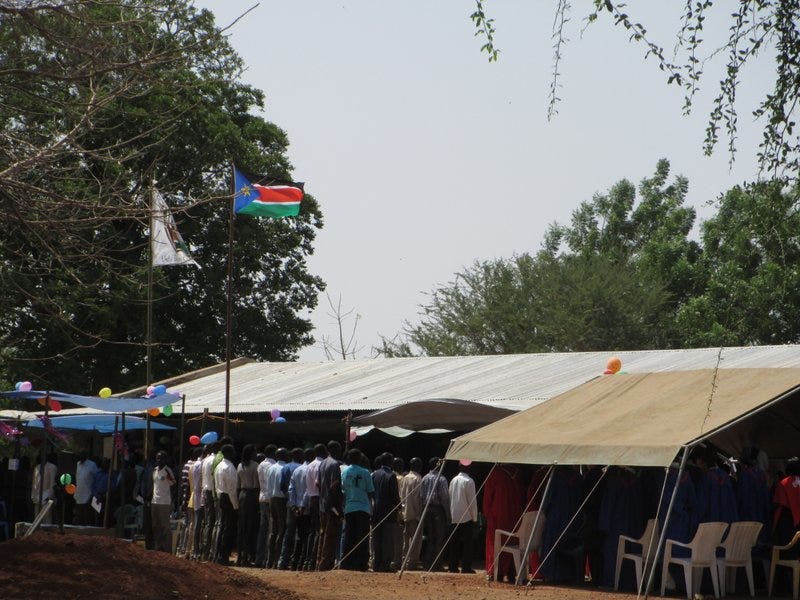
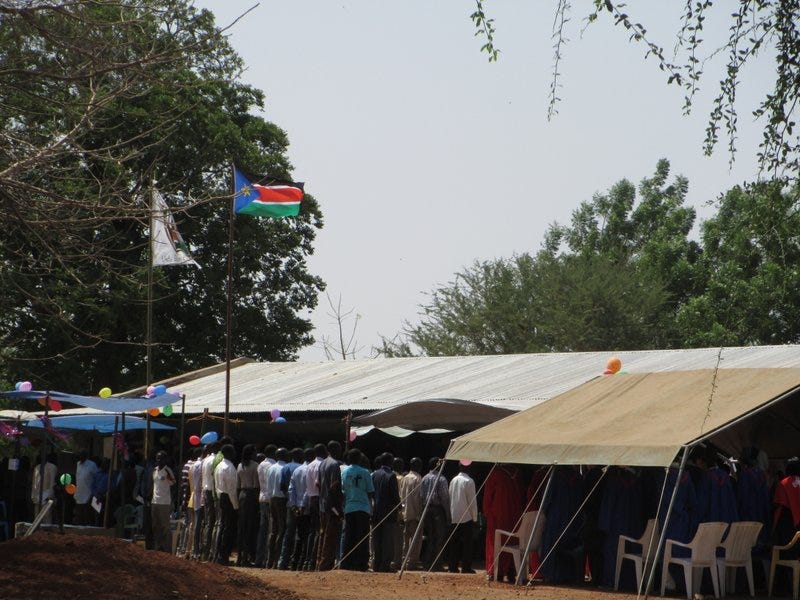
Extreme heat is disrupting education in South Sudan, where many schools are not built for dangerous temperatures — South Sudan closed all schools for two weeks last February after an extreme heatwave caused students to collapse in Juba, with officials reporting an average of 12 student collapses per day in the capital. Temperatures were expected to reach 42°C, prompting health officials to urge residents to stay indoors, drink water, and avoid heat exposure. This was the second year in a row the country closed schools during a February–March heatwave. A rapid attribution analysis found that human-caused climate change made the February 2025 heat event in the South Sudan region at least 2°C hotter and at least 10 times more likely, with a similarly frequent event estimated to have been around 4°C cooler in a climate without today’s level of warming. Many classrooms are built from iron sheets and have no electricity for fans or cooling, making them dangerously hot during the hottest months of the year. Education workers have urged the government to adjust the school calendar so students are not in class during the worst heat, with some calling for schedules that reflect weather conditions across South Sudan’s 10 states. Civil society groups also criticized the lack of contingency planning, arguing that repeated emergency closures are interrupting education in a country already strained by political instability, economic crisis, and a fragile health system.
South Sudan’s education system is also being disrupted by flooding, heavy rainfall, drought, and soil erosion, not just heat. Education officials reported that some schools relocate up to three times a year to escape flooding, while others run multiple shifts to absorb students displaced from flooded schools. In some areas, floodwater submerges classrooms, blocks access to school buildings, damages roofs, and forces children to evacuate to higher ground. These disruptions have contributed to dropouts, job losses for teachers, and higher risks for girls when schools close, including early marriage and child labor. South Sudan is now developing state-level climate risk analyses for the education sector, so planning can reflect the different hazards facing schools across each state and administrative area.
A recent fight over water access in eastern Chad turned deadly as scarce resources, displacement, and border insecurity strain local communities — At least 42 people were killed and 10 others wounded in late April after clashes between two families over access to a water point in Igote village, in Wadi Fira province near Chad’s border with Sudan. The army intervened, and officials said mediation and legal proceedings had begun. The clash happened in a region already under pressure from the war in Sudan, which has pushed large numbers of refugees into Chad and stretched access to water, land, and basic services. Similar resource-related violence has occurred elsewhere in the country, including farmer-herder clashes last year that also left dozens dead and homes burned.
The pressure on local water points is part of a broader struggle over land and water across the Lake Chad region. Lake Chad supports farming, fishing, grazing, and flood-recession agriculture for communities across Chad, Cameroon, Niger, and Nigeria, but droughts in the late 20th century shrank its surface area by more than 90%. Although the remaining water has partly stabilized, the lake is still less than one-tenth of its 1960 size, and the surrounding landscape now shifts between wetlands, islands, flooded pools, grazing areas, fishing grounds, and farmland. Armed groups have used dense wetlands and woodlands for cover, controlled access to pastures, fishing areas, and cropland, and demanded fees from farmers, fishers, and herders.
Climate change adds another layer by making rainfall more unpredictable and worsening temporary water scarcity, increasing pressure on the limited places where people can still reliably graze animals, plant crops, catch fish, and find clean water for their families. In areas where government services are limited and armed groups already influence access to land, pasture, fishing areas, and markets, those conditions fit into a wider set of pressures in which climate stress, displacement, and limited governance capacity converge around the same resources people depend on for daily survival. That makes local disputes more difficult to resolve before they escalate, especially in border areas where conflict, migration, and weak public services are already affecting communities.
Unreliable water access across the region is also undermining maternal and newborn health care in countries where health facilities already struggle to maintain basic services — In Sudan, for example, unreliable water supplies are affecting maternal health care, which requires safe water during pregnancy, delivery, and postpartum recovery. More than half of Sudanese maternity facilities with water access rely on sources other than piped water, 60% of facilities report frequent water supply interruptions, and facilities with no water source at all make up the bottom tier of the least water-secure facilities in the country. Some specialized facilities that provide emergency obstetric and neonatal care receive water only by truck during the dry season. Red Sea and River Nile are consistently among the most water-insecure states in both current and projected future conditions, with Red Sea also having the lowest share of the population with access to an improved water source. Without reliable water, birth attendants cannot maintain basic hygiene standards, and the risk of infection during and after delivery rises. A geospatial analysis found that the population served by the least water-secure emergency obstetric and neonatal care facilities is projected to grow from 12.88 million to 21.47 million by 2030. This is compounded by the fact that water security was not included as a criterion when Sudan’s national network of emergency obstetric facilities was designated.
Secondary School by Amy the Nurse via flickr (CC BY-NC-ND 2.0)
Philippines
Beneath the surface, climate change and pollution are threatening coral reefs in the Philippines — Coral reefs are already under intense pressure from climate change, but polluted underground water flows are accelerating their decline. Known as submarine groundwater discharge (SGD), these underground flows can help regulate coastal water chemistry, but they are increasingly serving as a pathway for pollution. In the Philippines, only about 10% of wastewater is treated, and just 5% of the population is connected to a sewer network. As a result, large volumes of untreated waste seep into the country’s groundwater (of which up to 58% is already contaminated), eventually reaching the ocean. Climate change compounds the problem by warming coastal waters and intensifying rainfall patterns that can speed polluted runoff and groundwater movement into reef systems. Unlike rivers, which visibly carry pollutants, SGD operates out of sight and can deliver large nutrient loads into coastal waters. Under natural conditions, these groundwater flows can help maintain coastal water chemistry, but human activity is increasingly turning them into a pollution pathway. These flows are now transporting increasing amounts of pollution into coastal waters, threatening coral reefs in the Philippines, which contains one of the world’s largest coral reef areas across more than 7,600 islands. The influx of nutrients is fueling harmful algal blooms (HABs), or “red tides,” which have become more frequent in the Philippines in recent years. HABs can cause shellfish poisoning, fish kills, and losses to fisheries and tourism. In 2025, an outbreak caused by the dinoflagellate Pyrodinium bahamense led to more than a thousand cases of paralytic shellfish poisoning (a severe and potentially fatal illness linked to biotoxins in algal blooms) in Samar and Sorsogon.
Scientists attribute these blooms to a combination of climate change and eutrophication, a process in which an overabundance of nutrients fuels rapid algal growth. This overgrowth can set off a chain reaction, depleting oxygen levels and, in severe cases, creating “dead zones” where marine life cannot survive. The problem is particularly pronounced in many island regions, where porous volcanic rock and limestone allow water, and pollutants, to move quickly through the ground. Limited sewage infrastructure often forces Filipino households to rely on septic tanks or cesspools that are poorly maintained and prone to leakage. As a result, untreated wastewater seeps into groundwater and eventually flows into estuaries, rivers, and the ocean. Research from Santiago Island in northwestern Philippines found that groundwater emerging beneath reef flats contained nutrient concentrations far higher than normal seawater. On Boracay, a small island known for its white sand beaches, traces of caffeine and pharmaceuticals have been detected moving from land to sea through groundwater, indicators of untreated wastewater, particularly in densely populated tourist areas.
HABs tend to peak during the southwest monsoon season (June to September), when heavy rains accelerate the movement of pollutants into coastal waters. In Metro Manila, fewer than 15% of residents are connected to a sewage system, leaving most wastewater to flow untreated into rivers or seep into the ground before reaching Manila Bay, which is now heavily polluted with dangerously high levels of faecal contamination. For coastal nations like the Philippines, the consequences are far-reaching. Healthy reefs support fisheries, tourism, and shoreline protection. Their degradation leads to declining fish stocks, reduced tourism revenue, and economic hardship for coastal communities. The six-month closure of Boracay in 2018 due to environmental damage affected more than 36,000 workers and resulted in losses of nearly USD 1 billion. Excess nutrients also contribute to low-oxygen (hypoxic) waters, which can kill fish, seagrass, and other marine life while degrading critical habitats, many of which support bivalve species such as oysters, clams, and scallops that naturally help filter the water. When these populations decline, the ecosystem loses an important line of defense, leading to smaller fish catches and higher seafood prices for both commercial and local communities.
Fuel price shocks are adding pressure to Philippine fishing communities already strained by warming waters and declining nearshore catches — Triggered by instability in the Middle East following renewed conflict involving Iran and disruptions in the Strait of Hormuz, one of the world’s key oil shipping routes, global fuel prices have surged in recent weeks, pushing up the cost of diesel and gasoline worldwide. For small-scale fisherfolk, the impact has been immediate and widespread. These fisheries, critical to food security for tens of millions of people across the Global South, depend heavily on fuel to power small motorized boats. Fuel typically accounts for 30–50% of operating costs. With diesel prices rising by as much as 60–120% in recent months, many fishers are now cutting trips short, reducing fishing days, or stopping altogether. With the Philippines importing about 98% of its fuel, the country is highly exposed to international price swings. Filipino fisherfolk groups such as Pamalakaya report diesel price increases of nearly 120% in March alone, with municipal fishers facing hikes of around 60%. Trips that once lasted 8–10 hours are now reduced to 4–6 hours, or abandoned entirely. Many fishers say they can no longer recover fuel costs, leaving little to no income per trip. As a result, rising costs are also being passed on through the supply chain, pushing seafood prices higher in local markets. These immediate cost pressures are unfolding alongside longer-term climate stress that is already making nearshore fishing less reliable. Rising sea levels, warming waters, and coastal development, including reclamation projects in areas such as Manila Bay, are pushing fish stocks farther offshore. As fishing grounds move further away, boats must travel longer distances and burn more fuel, making already high costs even harder to sustain. Across the sector, which directly and indirectly supports more than two million Filipinos, incomes, already often below $10 a day, are falling even further, with some fishers reporting near-zero earnings per trip.
Along the coast, women play a central but often overlooked role in the fisheries economy. Women account for an estimated 40% of post-harvest work (including cleaning, drying, processing, and selling fish) in the Philippines, and 60% of gleaning, or the harvesting of invertebrates such as shells, crabs, and sea urchins during low tide. Many also take on unpaid tasks such as net repair, bait preparation, and unloading catches, all while managing household responsibilities. As catches decline and energy costs rise, that work is becoming less reliable and less profitable. In some communities, rising liquefied petroleum gas prices have forced households back to using firewood for fish processing. At the same time, increasing costs of basic goods and energy are deepening what is described as “time and energy poverty,” where women spend longer hours on unpaid labor while having less access to income and food.

We Would Love to Hear From You!
Have you noticed the impacts of extreme heat in your community? Whether it’s unusual weather patterns or disruptions in local ecosystems, we’d love to hear your thoughts. Share your experiences or observations in the comments below and join the conversation!
Your Feedback Matters
At Global Climate Dispatch, we strive to provide accurate and equitable coverage of climate change and its impacts. If you come across anything that seems inaccurate or concerning, please don’t hesitate to let us know. Your insights help us ensure that the information we share remains truthful, balanced, and relevant to all.
Locations featured are chosen based on data from Climate Central’s Climate Shift Index map. Some graphics used may also come from Climate Central’s Climate Shift Index map. Any original analyses contained in this blog or any views expressed in this blog, unless otherwise noted, are solely the expression of its authors and are unaffiliated with Climate Central or any other entity or person referenced within.
Climate volatility (droughts, floods, heat stress) is reducing agricultural yield reliability, while geopolitical conflicts and energy price spikes are increasing the cost of production, transport, and fertilizers. When these forces combine, food prices stop behaving like normal commodities and start behaving like stress indicators of the global system itself.
The rise in staples like beef and olive oil is not isolated. it reflects pressure across the entire supply chain:
higher feed and livestock costs
energy-intensive farming inputs
disrupted trade routes and logistics
currency and inflation spillovers
What makes this more serious is the compounding effect: climate shocks are becoming more frequent at the same time that global systems are more tightly coupled. That means a disruption in one region doesn’t stay local. it propagates quickly into global pricing.
Food inflation is no longer just about agriculture. It’s about energy, geopolitics, climate, and financial stability all interacting at once.
If trends continue, the risk is not just higher prices, but structural food insecurity for vulnerable economies and households, even in developed markets.
The real question moving forward is whether food systems can be redesigned for resilience or whether we continue to treat each shock as temporary while the baseline volatility keeps rising.