
Global Climate Impacts: Food System Risks, Infrastructure Strain, and Ecosystem Change
Rising temperatures are driving health and food system losses in India and reshaping ecosystems and infrastructure across Europe, while climate pressures are threatening agriculture and food security

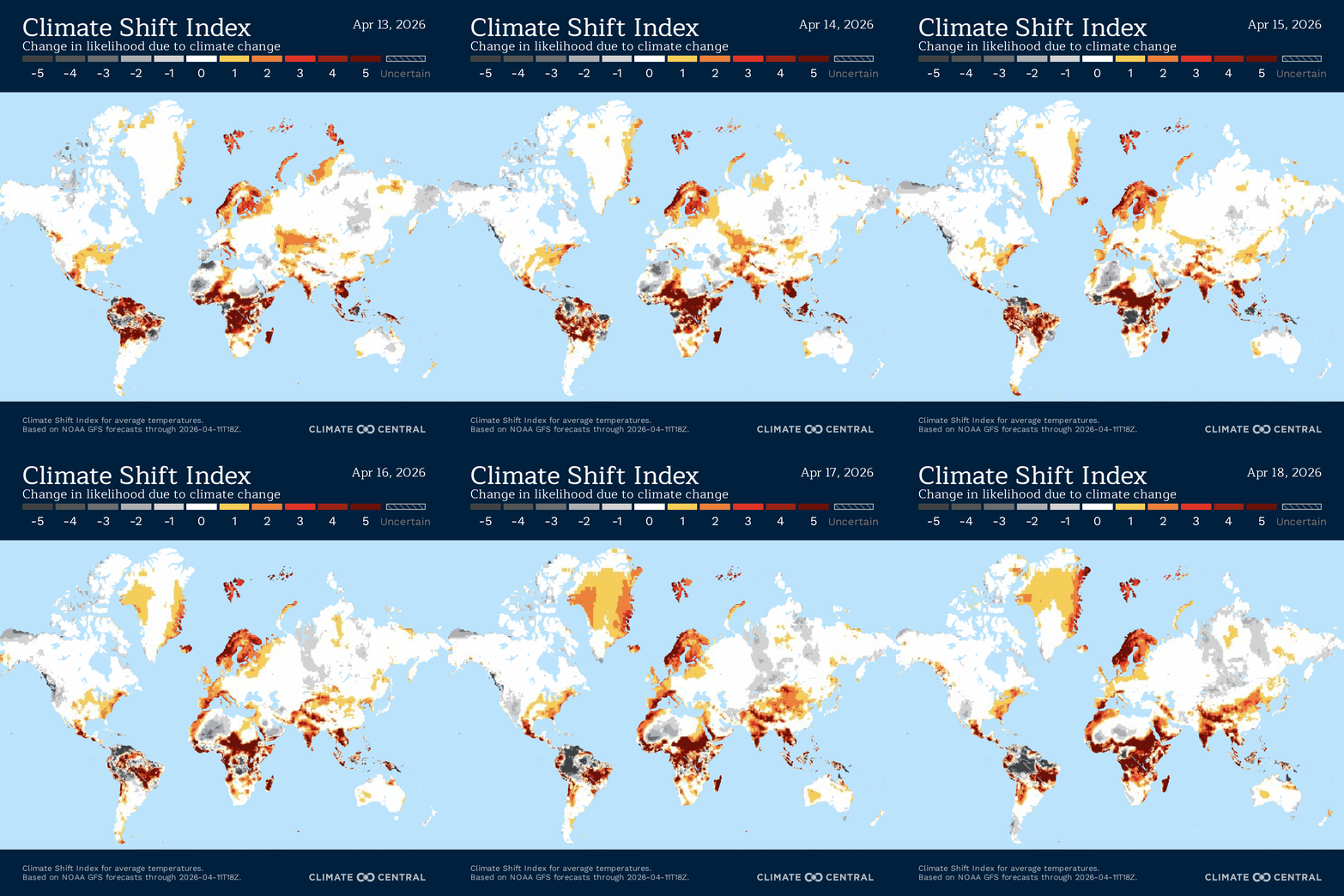
Climate Central’s Climate Shift Index1 (CSI) indicates that temperatures made at least five times more likely are impacting multiple regions across the world this week. The CSI identifies where human-caused warming is influencing local temperature conditions, and we use it as a guide to highlight where impacts are showing up. In India, extreme heat and air pollution are driving health and economic losses, while warming winters are beginning to reduce wheat yields by shortening critical growing periods. In Finland and Sweden, changing temperatures and snow conditions are altering bird distributions and contributing to species loss at the national level. In Norway, increasing rainfall and rising temperatures are exposing rail infrastructure to growing risks from flooding and heat stress. In West Africa, warming is expanding the range of crop disease into major cassava-producing regions in Nigeria, while shifting rainfall in Niger is disrupting pearl millet farming and forcing widespread adaptation.


Need to read this in a language other than English? Try OpenL (up to 1,500 characters) or Google Translate—both offer free translations into 100+ languages.
India
Climate change is increasingly translating into health and economic losses across India, with rising temperatures, air pollution, and extreme weather compounding existing vulnerabilities — A report by ClimateRISE Alliance and Dasra found that India lost an estimated 160 billion labour hours in 2021 due to heat exposure, equivalent to 5.4% of GDP, reflecting how extreme heat is already constraining physical work capacity at a national scale, while health losses linked to air pollution cost around a further 2% of GDP annually. Heat exposure has also been linked to an 11.7% increase in cardiovascular mortality risk, a major concern in a country where heart disease already accounts for nearly a third of deaths, and is affecting maternal and newborn health, with pregnant women experiencing more frequent extreme heat and research linking heatwaves to higher rates of preterm birth, stillbirth, and infant hospitalisation. These impacts extend across the life course, shaping health outcomes from pregnancy through chronic disease, while also feeding back into economic productivity through lost work and increased strain on health systems. The risks are not evenly distributed. Women, children, informal workers, and rural populations face the greatest exposure, particularly where access to healthcare and safe working conditions is limited, highlighting how climate stress is amplifying existing inequalities rather than creating entirely new ones.
These health and productivity losses sit within a broader economic vulnerability. A World Economic Forum report found that a third of India’s GDP comes from sectors highly dependent on nature, including agriculture, fisheries, forestry, and construction, all of which are directly exposed to climate risks such as rising sea levels, receding glaciers, and increasingly unpredictable monsoon patterns. Agricultural output alone is projected to fall by 16% by 2030, equivalent to a 2.8% GDP loss, while broader climate impacts could cost between 6.4% and more than 10% of national income by the end of the century and push 50 million more people into poverty. Despite strong stated commitments to sustainability among India’s largest corporations, actual investments in natural climate solutions remain limited, with more than half of companies surveyed investing less than $1 million, against an estimated requirement of over $9 billion per year in the forestry sector alone to meet India’s 2030 climate targets.
Climate change is threatening India’s wheat supply, with rising temperatures compressing the growing window for one of the country’s most essential crops — India is the world’s second-largest wheat producer, growing over 105 million tonnes annually across more than 30 million hectares, and wheat forms the basis of daily nutrition for over a billion people. The crop depends on the cool, stable temperatures of the Rabi season from November through April, conditions that are becoming increasingly unreliable as winters warm. Research has found that for every 1°C rise in average temperature, wheat yields in India drop by around 7%, a pressure that is already evident in recent harvest data. The grain-filling stage, when plants accumulate starch, protein, and nutrients into each grain, is the most critical and most vulnerable part of the growth cycle. When temperatures rise too early, plants rush through this stage, producing smaller, lighter grains with lower protein content and reduced nutritional value, meaning less flour per harvest and higher prices downstream. February 2025 was India’s hottest February in 124 years, with temperatures spiking during exactly this window. Modelling across northern India’s agro-climatic zones suggests the vegetative growth period could shorten by up to 14 days by the 2080s under high emissions scenarios, with yield reductions of up to 30%. Under a high-emissions scenario, losses could reach between 40 and 100% in northern and central India by 2100. The 2024 to 2025 wheat procurement season reflected these pressures in concrete terms, with the Food Corporation of India collecting only 26.6 million tonnes against a target of 34.15 million tonnes, a shortfall directly attributed to climate stress on crops.
Photo by shraddha kulkarni on Unsplash

Norway, Sweden, Finland
Climate change is reshaping bird distributions across Finland, forcing a significant update to the country’s network of Important Bird Areas as species shift their ranges, migration patterns, and wintering behavior in response to warming conditions — An updated national assessment added nine new Important Bird Areas, bringing the total to 91, reflecting changes that have accelerated in recent years as warming winters and shifting ice conditions alter where birds can breed, stage, and overwinter. Finland has long been internationally important for waterbirds, particularly seabirds and waders breeding in the Baltic Sea archipelago, and hosts nearly 70% of the European population of the Broad-billed Sandpiper. But the updated network reflects a more dynamic picture in which the country’s role in bird conservation is expanding in some areas while becoming more precarious in others. Many Arctic wader species, including the Red-necked Phalarope and Spotted Redshank, are retreating northward as climate pressure intensifies, making Finland an increasingly critical stronghold for populations whose breeding ranges are contracting across Europe. At the same time, milder winters are drawing species like the Tufted Duck and Smew to Finnish waters in greater numbers, and Finland has become the most important staging area for Barnacle Geese during spring and autumn migration, with some sites recording between 150,000 and 300,000 individuals in passage. Agricultural landscapes in southern Finland have also emerged as newly significant habitats as migration routes shift, with fields and coastal farmlands now supporting internationally important concentrations of staging geese and other waterbirds that were not previously recognized in the network.
Climate change is identified as the biggest overall threat to Finland’s birdlife, and many of the newly identified sites currently lack formal legal protection, leaving birds increasingly dependent on areas that are vulnerable to development, renewable energy projects, and changes in land use. Wetland degradation from eutrophication adds further pressure, reducing the ecological quality of sites that migratory and wintering species now rely on, and making active habitat management and restoration increasingly important.
In Sweden, these pressures have already resulted in the loss of a species. The Snowy Owl was declared regionally extinct in autumn 2025, the first time in 20 years that the country has officially lost a bird. The owl bred irregularly in Sweden for centuries, with several hundred pairs raising young in the mountains during the 1970s, but no breeding has been recorded since 2015. The primary driver is climate change, which has brought warmer winters, more rain, and less snow to the Arctic, destroying the snow tunnels that lemmings rely on to survive. Without sufficient lemming populations, Snowy Owls cannot breed successfully, and as Arctic landscapes continue to warm, the conditions that once made Sweden a suitable habitat are disappearing. The species remains globally present, listed as Vulnerable on the IUCN Red List with an estimated 14,000 to 28,000 individuals worldwide, but its disappearance from Sweden is not an isolated event. Most owl species in Sweden are declining, and the Snowy Owl's extinction there reflects a broader regional pattern in which warming winters are reducing the frequency of lemming population cycles that Arctic owls depend on to breed successfully.
Climate change is increasing physical risks to Norway’s railroad network, with flooding and heat stress emerging as the most significant threats to infrastructure designed for a different climate — Norway’s railroad network spans more than 4,000 km across varied terrain, carrying over 80 million passengers and nearly 35 million tonnes of goods annually, with most traffic concentrated in low-lying areas around the Oslo Fjord. Climate projections show flooding as the most pressing near-term risk, with consecutive wet day spells increasing across multiple regions by up to two days or more by 2040 under high emissions scenarios. Heavy rainfall can erode track embankments, trigger landslides, and block lines, and the concentration of traffic in these low-lying areas means disruptions can cascade across the wider network. Because rail lines have limited redundancy compared to road networks, even localized failures can lead to cascading delays across passenger and freight systems. Heat stress presents a growing but less fully addressed risk. Maximum temperatures are projected to rise by 2 to 3°C between 1990 and 2040, potentially reaching 30°C in southeastern regions with the highest railroad density. Tracks are typically stress-tested at around 27°C, meaning temperatures already within reach could begin to cause buckling capable of derailing trains. While flooding preparedness has been a central focus, limited attention to high-end temperature scenarios leaves a gap in readiness as heat-related risks continue to increase.
Photo by Zdeněk Macháček on Unsplash

Niger, Nigeria
Warming temperatures are expanding the range of a deadly cassava disease toward Nigeria, threatening a crop that sits at the center of the country's agriculture and its food security — Cassava is Africa's second most important staple food, feeding over 800 million people worldwide, and Nigeria is at the heart of global production, contributing more than 20% of the world's supply and over 60 million tonnes annually. The crop is unusually resilient, capable of growing in poor soils and under low rainfall, and warming temperatures are projected to expand suitable cassava habitat to nearly two-thirds of Africa's land area by 2050. But that expansion comes with a growing risk. Cassava brown streak disease, spread by whitefly that thrives and reproduces more rapidly in warmer conditions, has already affected 33.7% of the continent's land area, with East Africa as the current hotspot. As temperatures continue to rise, projections suggest that between 55 and 57% of Africa's land area will be vulnerable to the disease by 2050, with the spread moving westward into major production zones that are currently disease-free. Nigeria faces particular exposure, with the disease projected to enter through its borders with the Democratic Republic of Congo and the Central African Republic. With 35 million Nigerians already facing food insecurity and 6.4 million children expected to be acutely malnourished by the end of 2026, a warming-driven disease outbreak cutting into the country's most important staple crop adds a significant and compounding layer of risk.
A tree species central to Nigeria’s rainforest ecosystem is facing accelerating habitat loss as climate change and human pressure shrink the areas where it can survive — The red ironwood tree, known locally as Ekki in Yoruba and Okopia in Igbo, is a commercially valuable tropical species currently listed as Vulnerable on the global IUCN Red List, but new research suggests its situation in Nigeria is considerably more severe than that classification reflects. Using species distribution modelling across current and future climate scenarios, researchers found that highly suitable habitat is already largely confined to southern Nigeria, concentrated in lowland rainforest and swamp forest zones in states including Cross River, Bayelsa, Delta, Rivers, and Akwa Ibom. Under a high emissions scenario, suitable habitat is projected to shrink by around 22% by 2050 and by approximately 53% by 2090, with the most acute losses in areas that currently serve as the species’ strongest refugia. Precipitation patterns, particularly rainfall during the coldest quarter, emerged as the dominant driver of where the species can survive, leaving it directly exposed to projected shifts in rainfall under future climate scenarios.
Human pressure compounds the climate risk significantly. Researchers documented extensive agricultural encroachment, debarking of mature trees, and logging activities during field surveys, and the human footprint index was identified as a consistent predictor of habitat degradation across all scenarios. A gap analysis found that most of the predicted suitable habitat falls outside existing protected areas, leaving the species exposed to ongoing extraction and land conversion with little formal protection. Based on these findings, researchers assess the species as likely qualifying for Endangered status within Nigeria, pointing to a substantially higher level of risk than its current global classification.
Shifting rainfall and rising temperatures are disrupting pearl millet farming in Niamey, Niger, forcing urban farmers to change practices that have sustained livelihoods for generations — A survey of 150 pearl millet farmers in Commune V of Niamey found that 98% acknowledged climate change and reported clear shifts in conditions over the past 30 years, including declining rainfall, more frequent and prolonged droughts, increased flooding, and rising temperatures. These perceptions are broadly supported by meteorological data from the same period, which show substantial variability alongside an overall drop in rainfall from a peak of 1,161 mm in 1998 to just 386 mm in 2019, with the most recent decade being the driest in the record. Farmers identified rainfall as the most critical and volatile variable, pointing not only to declining totals but also to increasingly erratic timing, shorter growing seasons, and intense rainfall events that trigger flooding.
In response, the vast majority have adopted adaptation strategies, with soil fertility regeneration the most widespread, used by 85% of respondents, followed by adjustments to planting calendars based on real-time rainfall observation, used by 57%. Among farmers engaged with agricultural extension services, 91% had adopted improved short-cycle millet varieties better suited to shortened rainy seasons. Adoption of these strategies was strongly associated with factors including access to training, membership in farmer associations, land availability, and the belief that climate change is driven by human activity. Pearl millet accounts for more than 65% of the sown area in most cropping systems in Niger, and with over 40% of households in Commune V engaged in urban farming, continued climate variability is placing increasing pressure on a crop that underpins food security in one of the Sahel’s most vulnerable urban settings.

We Would Love to Hear From You!
Have you noticed the impacts of extreme heat in your community? Whether it’s unusual weather patterns or disruptions in local ecosystems, we’d love to hear your thoughts. Share your experiences or observations in the comments below and join the conversation!
Your Feedback Matters
At Global Climate Dispatch, we strive to provide accurate and equitable coverage of climate change and its impacts. If you come across anything that seems inaccurate or concerning, please don’t hesitate to let us know. Your insights help us ensure that the information we share remains truthful, balanced, and relevant to all.
Locations featured are chosen based on data from Climate Central’s Climate Shift Index map. Some graphics used may also come from Climate Central’s Climate Shift Index map. Any original analyses contained in this blog or any views expressed in this blog, unless otherwise noted, are solely the expression of its authors and are unaffiliated with Climate Central or any other entity or person referenced within.